
 Shears, demolition jaws for excavators
 Hydraulic drill rigs
 Hydraulic pile drivers for excavators
 Screening buckets for excavators
 Hydraulic grapples for excavators
 Chain trenchers
 Mixing buckets for excavators
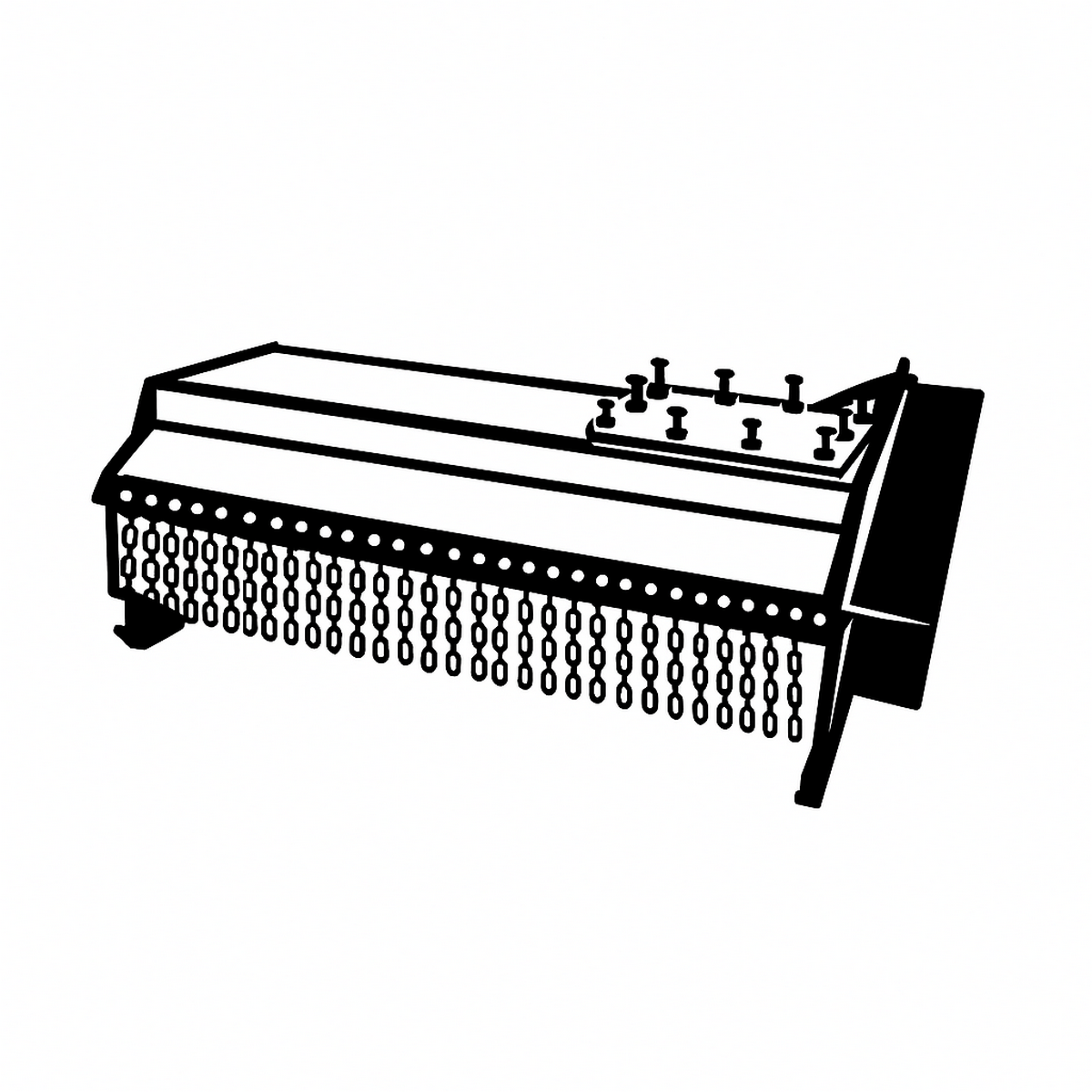 Flail mowers
A wider bucket on a mini excavator often tempts with the simple promise - you will do more, faster and cheaper. In practice, it can be exactly the opposite, as a few extra centimetres can change the way the machine works, the load on the engine and real fuel consumption. If you want to know when larger dimensions really pay off and when they are just an apparent saving, this article will help you look at the subject without guesswork and without costly mistakes.
Does a wider bucket really speed up the job, or does it just increase combustion? Check before you put the biggest one on
At first glance, everything seems simple - a wider bucket means more excavated material per cycle, and since you're taking more, it's logical that the job should go faster. In practice, this is where the first pitfall comes in. A mini excavator doesn't work in a vacuum, it works in specific conditions - in specific soil, on specific terrain and with the limitations of the machine's weight and power. With light materials such as sand or gravel, a larger width can actually reduce working time, because the digging cycle remains smooth, the hydraulics are not overloaded and the engine does not have to "come up" to the set rpm for a long time. This is when productivity, measured in m³/h, increases and total fuel consumption for the task can even drop, even though the instantaneous combustion for the hour looks the same.
The problem begins when the width of the bucket begins to overtake the real capacity of the machine. In heavier ground, with clay, stone or rubble, a larger cutting surface means noticeably more drag, and this immediately translates into a higher load on the hydraulic system and engine. The digging cycle lengthens, the operator has to correct the movement more often, and instead of full intakes there are 'half paddles', which look good visually, but do not give a real gain in productivity. In such a situation, the fuel meter spins faster and the m³ arrives slower, with the result that a wide bucket generates additional cost instead of savings. This is why width in centimetres alone should never be the only selection criterion.
More on the cycle, but slower in practice? How excavator bucket dimensions affect load, duty cycle and fuel
The dimensions of an excavator bucket affect not only how much material you pick up, but, more importantly , how hard the whole machine has to work per cycle. A larger capacity also means a higher empty weight of the attachment, more soil to be stripped and a higher demand for hydraulic power. On 1-2 t mini excavators, where typical combustion is between 2-3 l/h, the difference between an efficiently sized bucket and an oversized one is felt almost immediately. The engine runs more often at a higher load, and each attempt to get a full bucket requires more time and precision. Performance per cycle increases on paper, but in practice the entire work cycle lengthens.
It is here that a key relationship becomes apparent - fuel consumption depends more on the number of cycles and engine load than on the bucket width itself. If a larger attachment causes the operator to have to slow down, correct the overrun or correct the arm position every now and then, fuel is also burned during movements that do not directly translate into an increase in cubic capacity. Productivity analyses show that a larger bucket increases productivity only up to a certain point, and then the differences start to 'flatten out'. Beyond this threshold, each additional centimetre of width adds to the load, but does not bring a proportional gain in cubic metres per hour, which is directly reflected in fuel costs.
|
Operating scenario |
Weight of mini-excavator |
Bucket width (cm) |
Est. Dipperstick capacity (m³) |
Soil type |
Estimated number of cycles to move 20 m³ |
Average machine fuel consumption (l/h) |
Operating time (h) |
Estim. fuel consumption per task (l) |
Practical comments |
|
Narrow installation trench bucket |
1,8 t |
30 |
0,03 |
Sand |
approx. 670 |
2,5 |
approx. 4,0 |
approx. 10 |
Precise, narrow excavation, little over excavation, but many cycles and longer time. |
|
"Standard" bucket for light excavation work |
2,7 t |
50 |
0,05 |
sand/light soil |
approx. 400 |
3,5 |
approx. 2,7 |
approx. 9,5 |
Good balance: fewer cycles than at 30 cm, shorter time, fuel consumption similar. |
|
Wide bucket in light soil |
3,0 t |
70 |
0,08 |
sand |
approx. 250 |
4,0 |
approx. 2,0 |
approx. 8 |
Larger bucket = fewer cycles, shorter time, realistically lower fuel per m³ excavated. |
|
Too wide bucket in hard ground |
3,0 t |
70 |
0,08 |
clay with stones |
> 300 (lots of "half buckets") |
4,5-5,0 |
approx. 3,0 |
13-15 |
Engine overloaded, frequent patching - time increases, fuel per m³ much higher. |
|
Narrow bucket in hard ground |
2,7 t |
40 |
0,04 |
clay |
approx. 500 |
3,5-4,0 |
approx. 3,5 |
12-14 |
Lighter for the machine, but lots of cycles and long time - fuel cost similar or higher. |
Too wide or too narrow - where the mini excavator starts to lose money on fuel
A bucket that is too wide is one of those choices that starts to cost money on site very quickly. In hard ground, the machine works harder, the instantaneous combustion increases and the engine reaches its limit more often. In practice, this not only means higher l/h, but also a slower work rate as the digging cycle gets longer. Then there's the manoeuvring aspect - wide attachments make it difficult to operate precisely in tight spaces, around existing installations or fences. Each amendment, each additional pass, is another second of engine work, which does not generate any gain in excavated material, but only increases fuel consumption.
On the other hand, a bucket that is too narrow is not ideal either. Although the engine then runs lighter and the instantaneous combustion may look very good, another problem arises - the number of cycles needed to do the same job increases dramatically. As a result, the total working time increases and, with it, the share of so-called fixed costs: tower rotation, machine repositioning, idling. On 2-4 t mini excavators, where the combustion is usually in the range of 3-5 l/h, the difference of a few extra working hours can cancel out the apparent savings from 'light' engine operation. The loss is not always immediately apparent, but in accounting for the overall job, the fuel starts to disappear faster than you expected.
How to select a bucket for a mini excavator for the ground, machine weight and task - rather than guessing by eye
It is worth treating the selection of a bucket for a mini-excavator as an informed technical decision, rather than a quick selection of the 'widest available'. In practice, several parameters come into play at the same time: the type of soil, the width of the planned excavation, the weight of the machine and the nature of the work. For 1-2 t mini excavators, buckets with a width of 25-30 cm work well for installations and narrow excavation work, 40-60 cm is a reasonable compromise for most earthworks, and 80-120 cm makes sense mainly for levelling and finishing work where resistance is low. It's not just the centimetres that are crucial, but also the capacity in m³, as this is what really determines the number of cycles and working time. It is worth reaching for bucket capacity calculators, which allow you to calculate how a change in dimensions will translate into cubic metres and fuel consumption for the entire job.
It's also important to remember that the bucket is not the only attachment that affects combustion. Hydraulic breakers for mini excavators or hydraulic drills for mini excavators can significantly increase fuel consumption, as they require the hydraulics to work constantly under heavy load, often at higher engine speeds. If you plan to work with such attachments, the selection of the basic bucket should be all the more sensible - an overly aggressive attachment combination can quickly increase operating costs. By consciously matching bucket dimensions to real-world conditions , the mini-excavator runs smoother, burns less per m³ and simply gets the job done faster, without overloading the machine or burning unnecessary fuel.
If you want to make a real difference to the performance of your mini excavator and control fuel consumption, it is not only the operator's technique that is crucial, but also the quality and fit of the attachments. At Techna Poland, you will find high-end excavator attachments designed to work in a variety of ground conditions and tasks. These include solutions to suit both 1-3.5 tonne mini excavators and 3.5-7 tonne mini excavators, where durability, stability and efficient power transfer are important. With a wide range of buckets, attachments and attachments, you can choose exactly the right equipment for your needs, without compromise and without overloading the machine unnecessarily. If you are looking for efficient work, lower fuel consumption and equipment that simply gets the job done, Techna Poland's offering is a direction worth checking out.
FAQ
Does a bigger bucket always mean higher fuel consumption?
No, because combustion depends mainly on the engine load and the number of work cycles, not on the bucket width itself. On light soil, a larger bucket can even reduce fuel consumption per m³, reducing working time.
Which bucket width for a 1-2t mini excavator is the most versatile?
For most earthmoving jobs, 40-60 cm buckets are best, combining sensible capacity with moderate machine loading. It's a compromise between capacity and combustion control.
Why does a bucket that is too wide in clay increase combustion?
Because the cutting surface and digging resistance increase, forcing the engine to work under a higher load. The cycle lengthens, corrections occur and fuel burns without a commensurate increase in excavation.
Can a bucket that is too narrow be fuel inefficient?
Yes, because it takes many more cycles and hours to turn the same volume of material, despite the lightness of the engine. As a result, the total burn per task increases.
Do attachments other than the bucket also affect fuel consumption?
Definitely yes - hydraulic hammers and hydraulic drills for the mini-excavator significantly increase fuel consumption through the constant high load on the hydraulic system. In such jobs, the choice of attachments is crucial for operating costs.
 Previous
