
 Shears, demolition jaws for excavators
 Hydraulic drill rigs
 Hydraulic pile drivers for excavators
 Screening buckets for excavators
 Hydraulic grapples for excavators
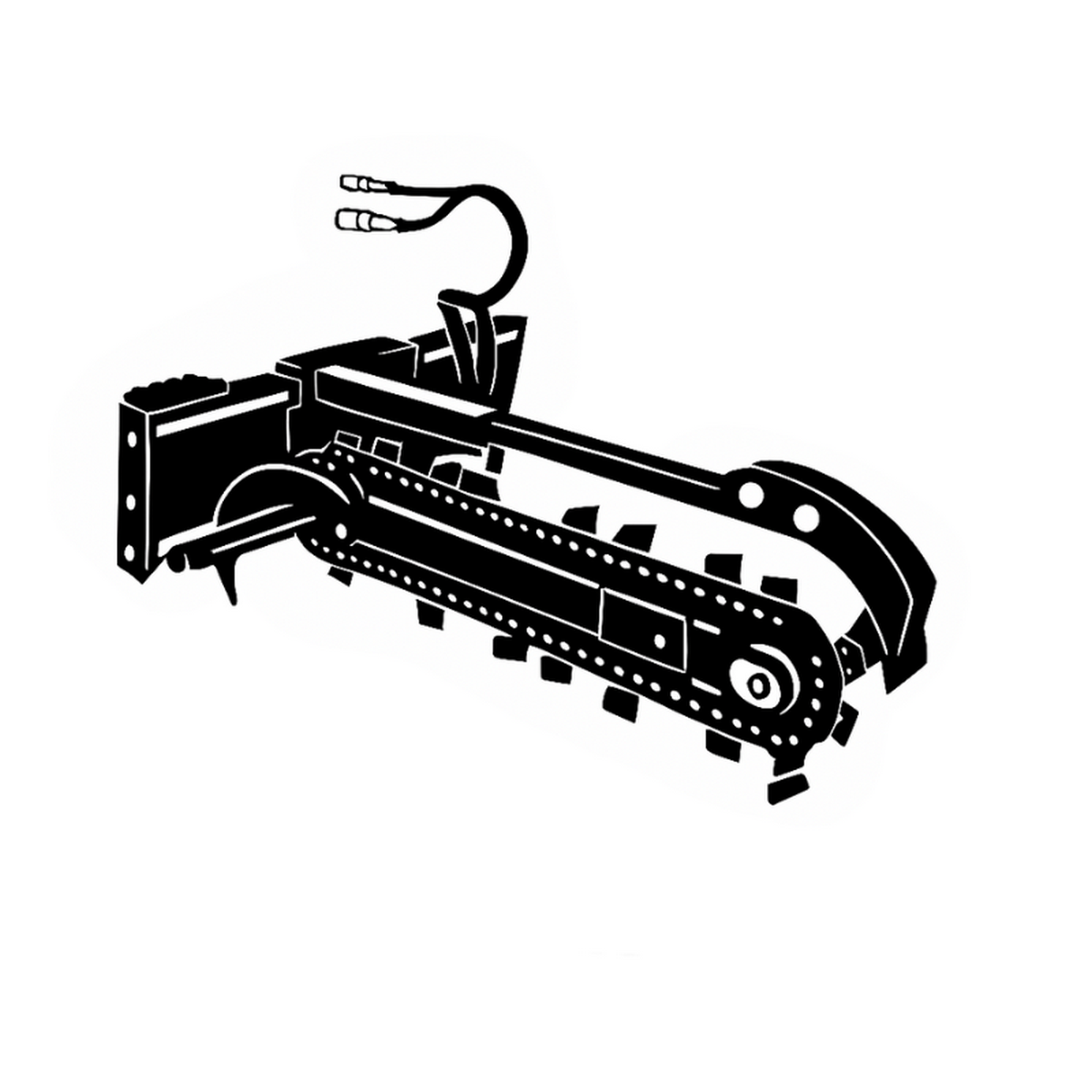 Chain trenchers
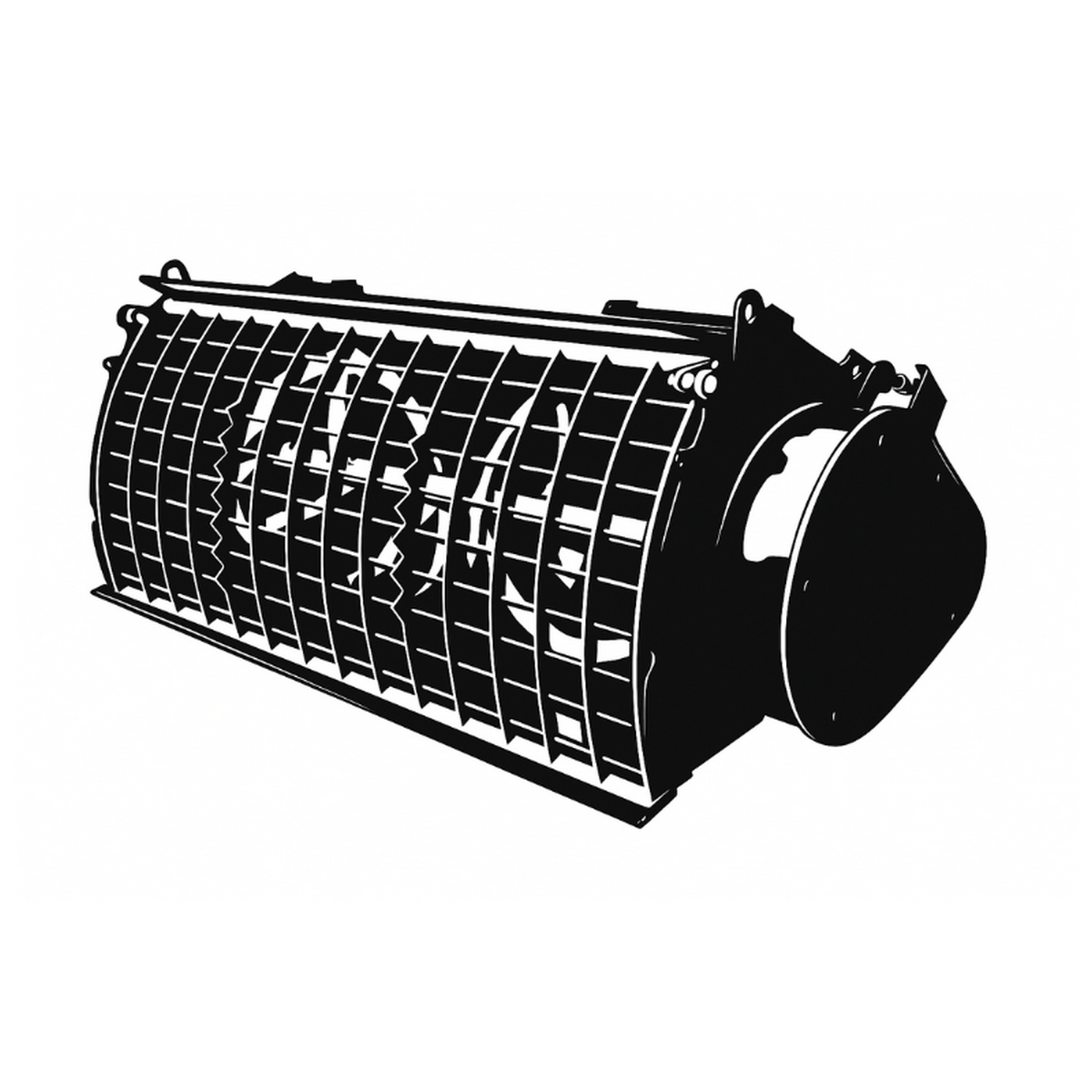 Mixing buckets for excavators
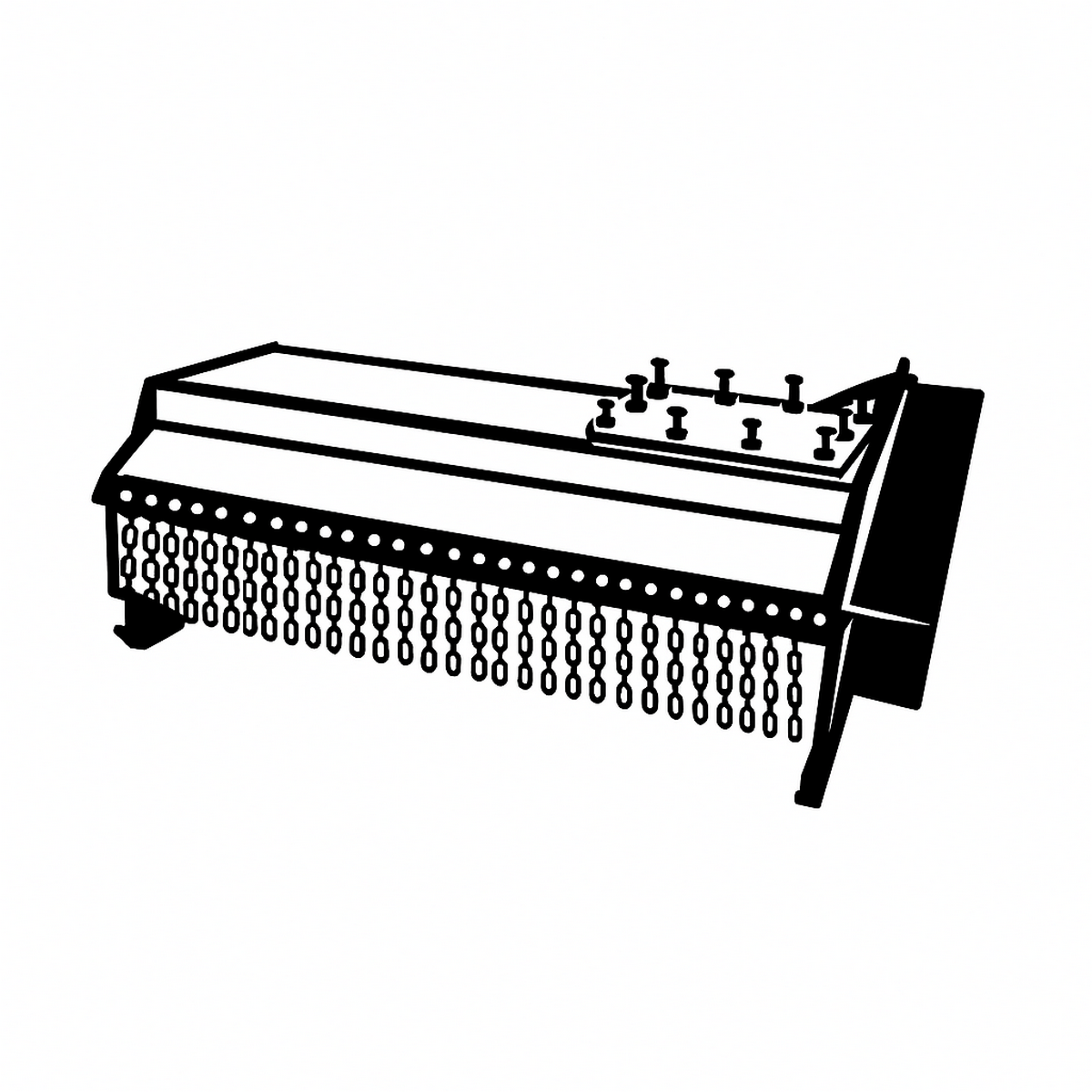 Flail mowers
If a busy street, track, river or simply a dense network of existing utilities is in the path of a project, a classic excavation can turn a simple project into a series of agreements, delays and 'extra' costs. That's when horizontal drilling (HDD) comes into play - a trenchless technology that allows you to carry out guided drilling precisely and without knocking down the ground between the entry and exit points. In this article, you'll see what HDD is used for in telecoms (fibre optics, FTTH) and in water and sewerage (water, sewerage, gas), when it realistically shortens the schedule and when it's better to let go so as not to burn through the budget.
Horizontal drilling rig - what is it used for in practice? See where traditional excavation simply doesn't make sense
With an HDD drill rig, you can drill horizontally or at an angle, and you can run the installation without digging up the entire route and without getting into the classic scenario - pavement demolition, detours, reconstruction, complaints and residents' nerves. In practice, it works so that the operator controls the drilling path thanks to navigation systems with accuracy measured in centimetres, and the drilling is supported by a bentonite mud that stabilises the hole, cools the tool and brings the excavated material to the surface. As a result, it is possible to pass underneath an obstacle "cleanly" - without cutting through the area with a trench, without the risk of the work spilling over into the following weeks through logistics and pavement restoration.
It is also important that HDD is not a single 'push and go' operation, but a process that gives control and predictability. First goes the pilot drilling with a probe, then the reaming to the required diameter (often with a spare), then the pulling in of the casing pipe or cable bundle, and finally the testing, documentation and acceptance. You benefit from this, because instead of struggling with a full excavation, you close the subject at the entry and exit points and in the process chambers - the rest of the site is left in peace.
Fibre optics without digging up the city - how horizontal drilling drives FTTH projects and carrier networks
In telecoms, HDD is often the element that 'propels' a project from the paper stage to real construction - especially where there is no room to dig up the street or where any interference with the pavement means closures, consents, agreements and a long list of risks. When installing fibre optics, it is not only speed that matters, but also that the cable goes exactly where it is supposed to go, and that there are no collisions with existing networks along the way. HDD makes it possible to precisely lay a route over long distances and to drill under obstacles that are an everyday occurrence in the city - roads, buildings, dense underground infrastructure. Added to this is the pragmatics of the operator: in many cases, the conduit is pulled in first and only then are the actual cables inserted. This is convenient, as it leaves you with flexibility - today you insert the fibre optic cable, tomorrow you can add more conduits or other cables, without returning with heavy equipment and without repeating the whole operation.
With FTTH (Fiber to the Home) projects, this effect is particularly noticeable because you're talking about bringing high-speed internet directly to your home or business, often in built-up areas where any additional interference with the site gets socially and formally costly. HDD helps you to prove speed because it reduces earthworks, and you get through the stages that normally block the investment more quickly. You also gain greater quality control - by controlling and monitoring the drilling path, it is easier to maintain the route, and this translates into less risk of collisions and fewer surprises on site.
Water, sewerage, gas - why the horizontal drilling rig has become a standard in modern water and sewerage developments
In water and sewer projects, HDD is proving its worth where conventional excavation is no longer a viable option - due to logistics, costs or the environment. Dense buildings, public utilities, historic zones or areas of high environmental sensitivity are all places where HDD drilling makes it possible to pass underneath an obstacle without disturbing the ground surface. In practice, the earthworks are often limited to small excavations at process chambers and manholes, and the space between the entry and exit points remains intact. This is a real saving - not only aesthetically, but also in terms of the budget, as costly pavement restoration and lengthy associated works are eliminated.
In the sewerage industry, an additional advantage of HDD is the ability to work at low gradients and in difficult groundwater conditions, including high groundwater levels. With a well-prepared design, the technology reduces the need for dewatering and extensive earthworks, which significantly simplifies implementation. In practice, modular PP pipes with diameters of DN 180, 225, 280 and 315, among others, are used, and gradients can reach 0.5% or even 0.2%, which for many routes is a major design advantage. Similarly, in gas networks - HDD allows passage under roads or bodies of water without blocking traffic or interfering with the terrain. If a project is all about time, safety and minimising conflicts, it is worth treating HDD as the standard and seeing where it actually wins out over classic excavation in the total project settlement.
Not every ground and not every project - when a horizontal drilling rig is the best choice and when it is not
HDD works best when you are treating it as a full-fledged engineering project rather than a quick replacement for excavation. Ground conditions are key - the technology performs well in compact and non-rocky soils, while gravel, boulders, unstable ground or high groundwater levels significantly increase risk and cost. With a high proportion of gravel or the presence of large stones, drilling may prove uneconomical or even impossible, so these factors must be taken into account at the planning stage.
Bentonite mud and the choice of drilling technology are equally important. It is responsible for borehole stability, spoil transport and pressure control, so wrong parameters quickly lead to execution problems. HDD also involves a high cost of entry, so it is best suited to larger projects or where traditional excavation would generate even higher costs and paperwork. The safest route is always the same: a sound ground investigation, a realistic assessment of the risks and an informed decision on the technology.
Techna Poland's offer includes high-quality hydraulic excavator drilling rigs, which - although they are not horizontal drilling rigs in the sense of HDD technology - in practice prove very helpful in many telecommunications and sewerage works. Among other things, they are suitable for shorter drillings, preparatory works, casing installations or works in confined spaces, where mobility, precision and rapidity are important. This makes such excavator attachments a functional complement to classic trenchless technologies, especially where full HDD would not be justified technologically or economically.
FAQ
- Does iNamiot offer drilling rigs for guided drilling (HDD)?
No. Guided drilling rigs (HDD) are not in the iNamiot range. - Will a horizontal drilling rig work in a city centre?
Yes, this is one of its main applications. HDD makes it possible to drill under streets, tracks and buildings without shutting down traffic or digging up the pavement. - What accuracy can be achieved with horizontal drilling?
Modern navigation systems make it possible to control the drilling path with an accuracy of several centimetres, even over long distances. This is crucial when working close to existing networks. - Is HDD technology suitable for gravity sewers?
Yes, with the right design it is possible to maintain small gradients of 0.5% or even 0.2%. This makes HDD also applicable to modern sewer networks. - What are the most favourable soils for a horizontal drilling rig?
The best conditions are compact and non-calcareous soils such as clay, silt or sand. Large amounts of gravel or boulders significantly increase the risk and cost of implementation. - Is horizontal drilling more expensive than traditional excavation?
The cost of equipment and implementation can be higher at the start, but in practice HDD often means lower overall costs because the expense of site remediation and pavement restoration is dropped. - Why is the bentonite mud so important in HDD technology?
The mud stabilises the borehole, cools the tools and transports the excavated material, while controlling the pressure in the borehole. Without it, precise and safe drilling would be impossible. - Do hydraulic drill rigs require a separate drive?
Not with excavator-mounted solutions. Such drill rigs are powered by the machine's hydraulic system, which simplifies logistics and reduces the number of pieces of equipment on site.
 Previous
