 Shears, demolition jaws for excavators
 Hydraulic drill rigs
 Hydraulic pile drivers for excavators
 Screening buckets for excavators
 Hydraulic grapples for excavators
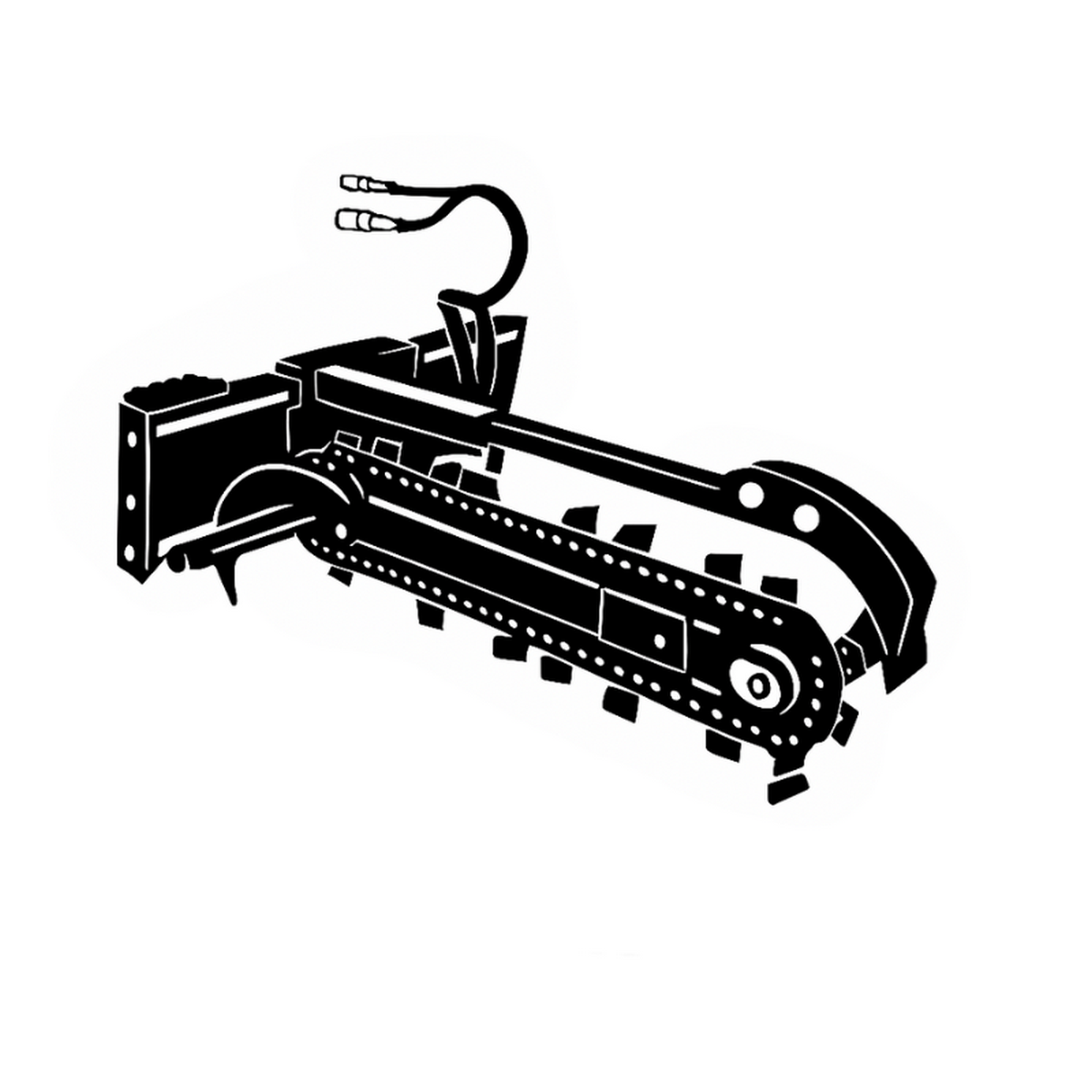 Chain trenchers
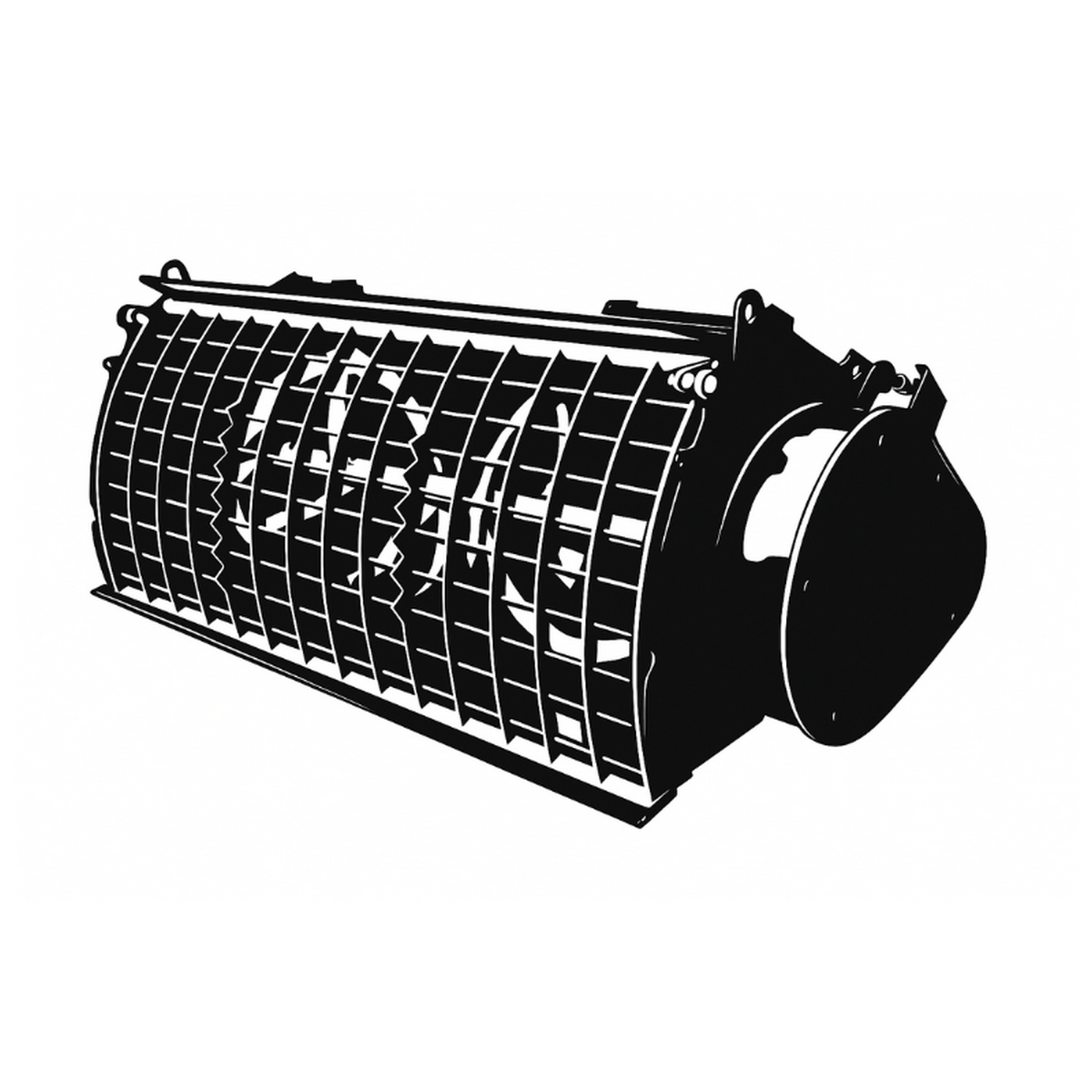 Mixing buckets for excavators
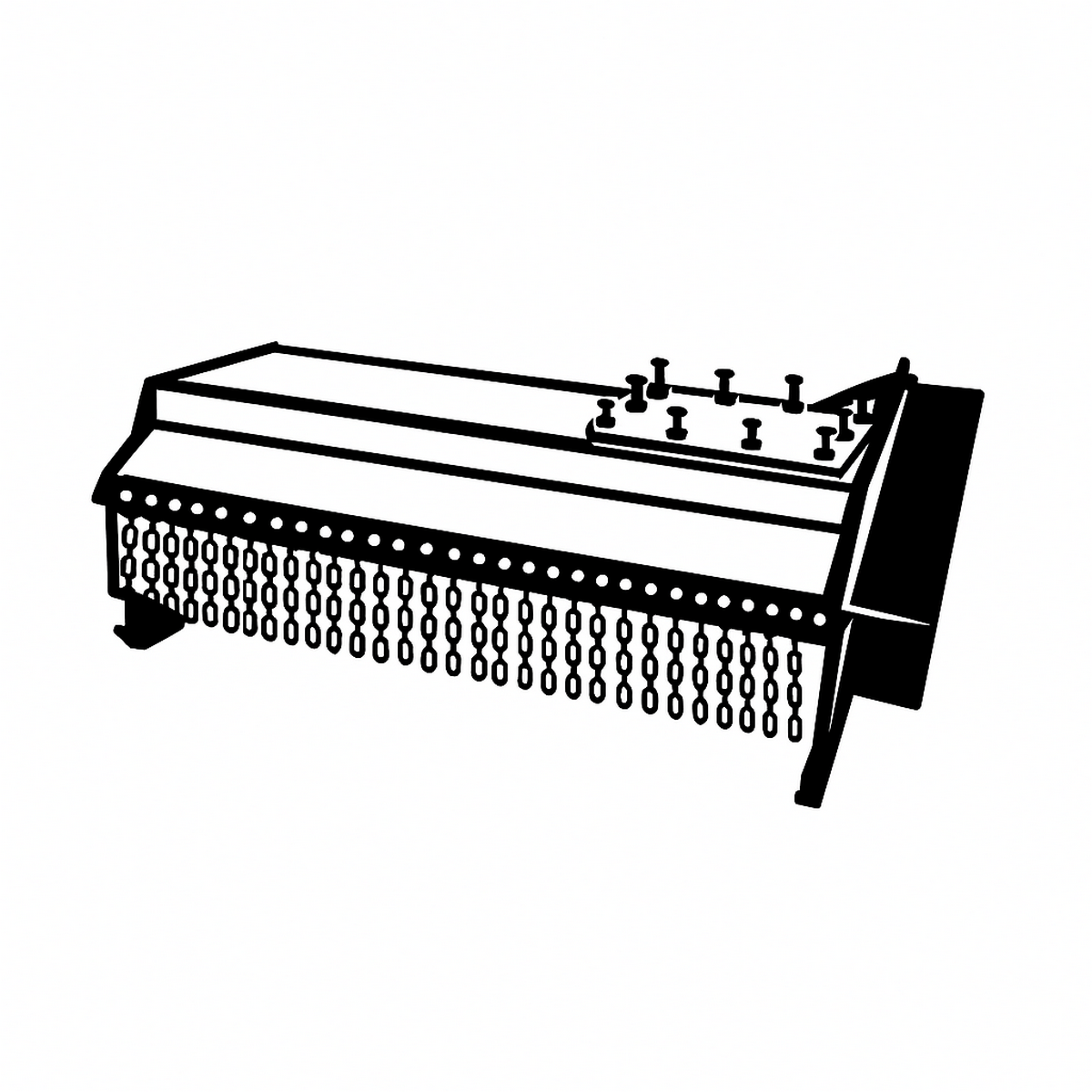 Flail mowers
Not every project requires its own hydraulic earth auger. Sometimes it's more cost-effective to simply hire it out, rather than keep it in stock for most of the year. On the other hand - if you do wells regularly, the investment in your own equipment can quickly pay off. In this text you will find not so much general pros and cons, but specific scenarios in which buying or renting simply pays off more. Without an excess of theory - from industry experience.
Buying or renting a hydraulic earth auger - what to think about before you decide
This is one of those questions that sooner or later arises for any construction or geotechnical company. A hydraulic earth auger for excavator is not an impulsive investment - it is an expensive piece of equipment, the purchase or rental of which should be preceded by a concrete analysis. It is not just about price. Much more important is how often you will use it, under what conditions, who will service it and.... whether you actually need to "own" it.
- On the one hand , buying gives you independence, full accessibility and the ability to tailor the equipment to your needs, but it also comes with the responsibility of storage, maintenance and any repairs.
- On the other hand, renting is a convenient, flexible and financially secure option, especially if you only need the equipment periodically or are testing different technologies. No risk of breakdown, no storage costs and the ability to use modern models without being tied to them for years - these are strong arguments.
Therefore, before you make a decision, take a look at the specific projects in front of you. Consider whether you need a drill rig for 200 hours in a given season, or maybe 20. Analyse your team - do you have operators who can operate and maintain such equipment? And most importantly: do you intend to use this equipment regularly in the future, or is this a one-off job? It is the answers to these questions that determine whether the purchase will pay off or prove to be a burden.
Ownership has its advantages - when does buying a hydraulic earth auger really pay off?
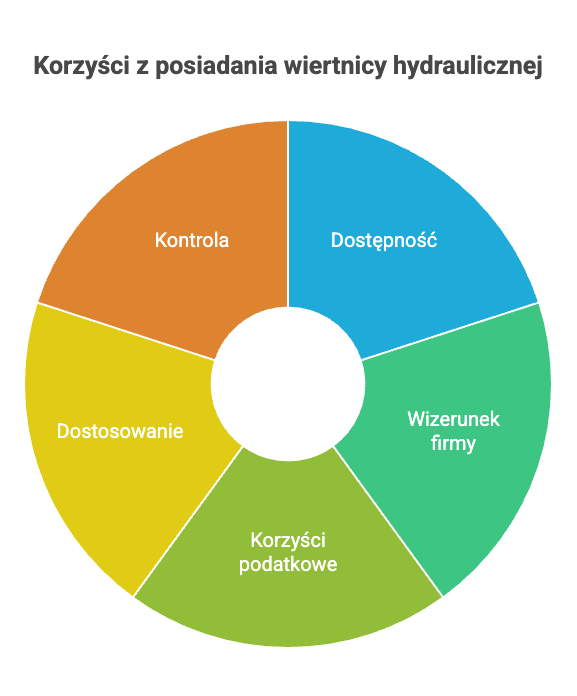
If your company regularly drills wells, works on multiple projects per year and needs an attachment available off-the-shelf - buying a hydraulic earth auger for mini excavator could be a hit. Having your own machine means you don't have to adjust your schedule to rental availability. The equipment is always on hand, ready to go, even when an urgent job suddenly arises.
Importantly, having your own drilling rig has a positive effect on your company image. The customer sees that you have your own machinery, and this builds trust and the perception of being a professional partner. There are also accounting benefits - the equipment can be depreciated, which means lower tax liabilities. Over time, the investment starts to work for itself, especially if you spread it over multiple projects and years.
The ability to customise the equipment is also not insignificant. You have control over configuration, retrofitting, as well as who uses it and how. If you have a service background, experienced staff and are planning for the long-term use of the equipment - an in-house drill rig will not only be more convenient, but also a more economical choice.
Drilling rigs used in construction machinery are increasingly based on hydraulic technology, such as hydraulic earth augers for JCB, ensuring smooth and quiet operation. Among other models, the CAT crawler excavator drill rig, ideal for deep drilling, is worthy of note. Kubota offers a durable hydraulic earth auger for mini excavators, and Bobcat users appreciate the compact Bobcat forging drill for its versatility.
Hiring a hydraulic earth auger for excavator - a flexible option that takes the risk off your hands
In a situation where you only need the equipment 'for a while' or you don't yet know how often it will be used - renting is an option that gives you a huge amount of flexibility. You don't have to commit tens of thousands of zloty, you don't have to worry about servicing, maintenance or storing the equipment after the season. You simply pay, use it, return it - and that's it.
This is a solution that not only smaller companies will appreciate. Even large companies benefit from renting when a project requires non-standard equipment or a sudden need for an extra unit arises. In addition, renting gives you the opportunity to test different models and technologies in practice - without the pressure of having spent money on something that doesn't quite work.
It is also worth remembering that most rental costs can be directly assigned to a specific project, which makes calculations and budgeting easier. This is very convenient if you are working with public clients, subcontractors or on grant projects. And importantly - in the event of a breakdown, the hirer takes care of the repairs, not you.
Buying or hiring a hydraulic earth auger - which puts more strain on the budget and which saves it?
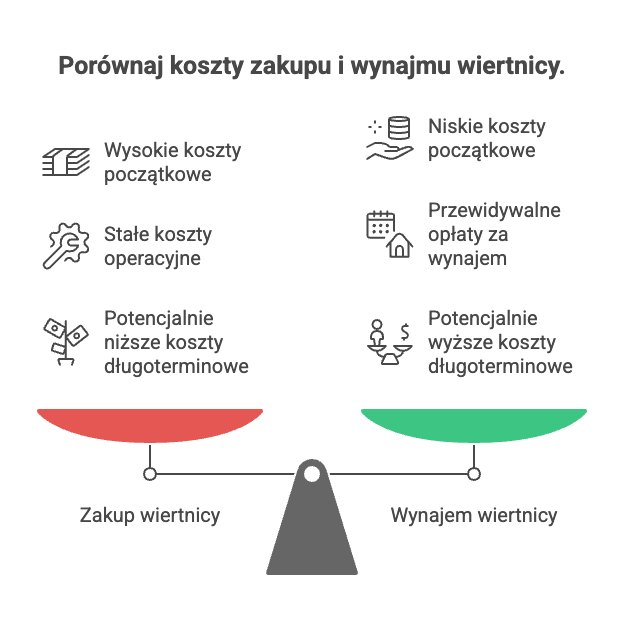
The purchase costs are specific and high - machine, transport, deployment, insurance. If you use a lease or loan, there are also instalments and interest. On top of this you have to add the fixed running costs: maintenance, inspections, spare parts, hiring or training operators. The owner of the equipment has to think not only about the investment, but about keeping it in good condition throughout its useful life.
Rental, on the other hand , is a fixed, predictable fee. You know how much a day, a week or a month of machine operation costs and you can factor this into the cost estimate for a specific project. You don't have to keep the equipment in storage, pay for space or worry about insurance - these issues are the responsibility of the rental company. Renting works particularly well for short projects where a purchase would not have time to pay for itself.
But here, too, it is worth being careful. Long-term rental can be more expensive than purchase if the equipment is used intensively over many months. This is why there is no one-size-fits-all option. You have to calculate - calmly, accurately and taking into account the full cost of ownership or use.
Owned or rented rig - in which scenarios does the option win out?
If you've been in the industry longer and have your equipment planned months ahead, buying gives you more independence and real savings in the long term. With an extensive technical background and an experienced team, it pays to invest in equipment that you can use repeatedly, in different configurations and on your own terms.
Rental, on the other hand, is ideal when you don't want to tie up capital, are testing different solutions or have a project for a week or two. It's also a great option for seasonal businesses that don't need a machine all year round. For many businesses, it's a form of sensible risk management - you avoid costs that you don't need here and now.
The truth is that sometimes it pays to own one piece of equipment and rent another on a regular basis. You don't have to choose once and for all - you can tailor your strategy to the current needs of your business. And that's the point: don't look for the 'better' option, just the one that really makes sense in your situation.
Read also:
- How to choose the right hydraulic earth auger for mini excavator?
- Drilling rigs for crawler excavators - what should you know before buying?
- Hydraulic earth auger for backhoe loader - what to look out for to get the right equipment?
- Proper operation of hydraulic earth augers
- Types of excavator drilling rigs - which ones to choose for specific tasks and materials?
- When to buy a new or used hydraulic earth auger - how to make the right decision?
- Hydraulic earth augers for excavators - what to choose hydraulic, mechanical or pneumatic drive?
- The most common failures and faults of hydraulic earth augers - how to solve them?
- Modern hydraulic earth augers - we present their applications in construction, agriculture and forestry
 Previous
