
 Shears, demolition jaws for excavators
 Hydraulic drill rigs
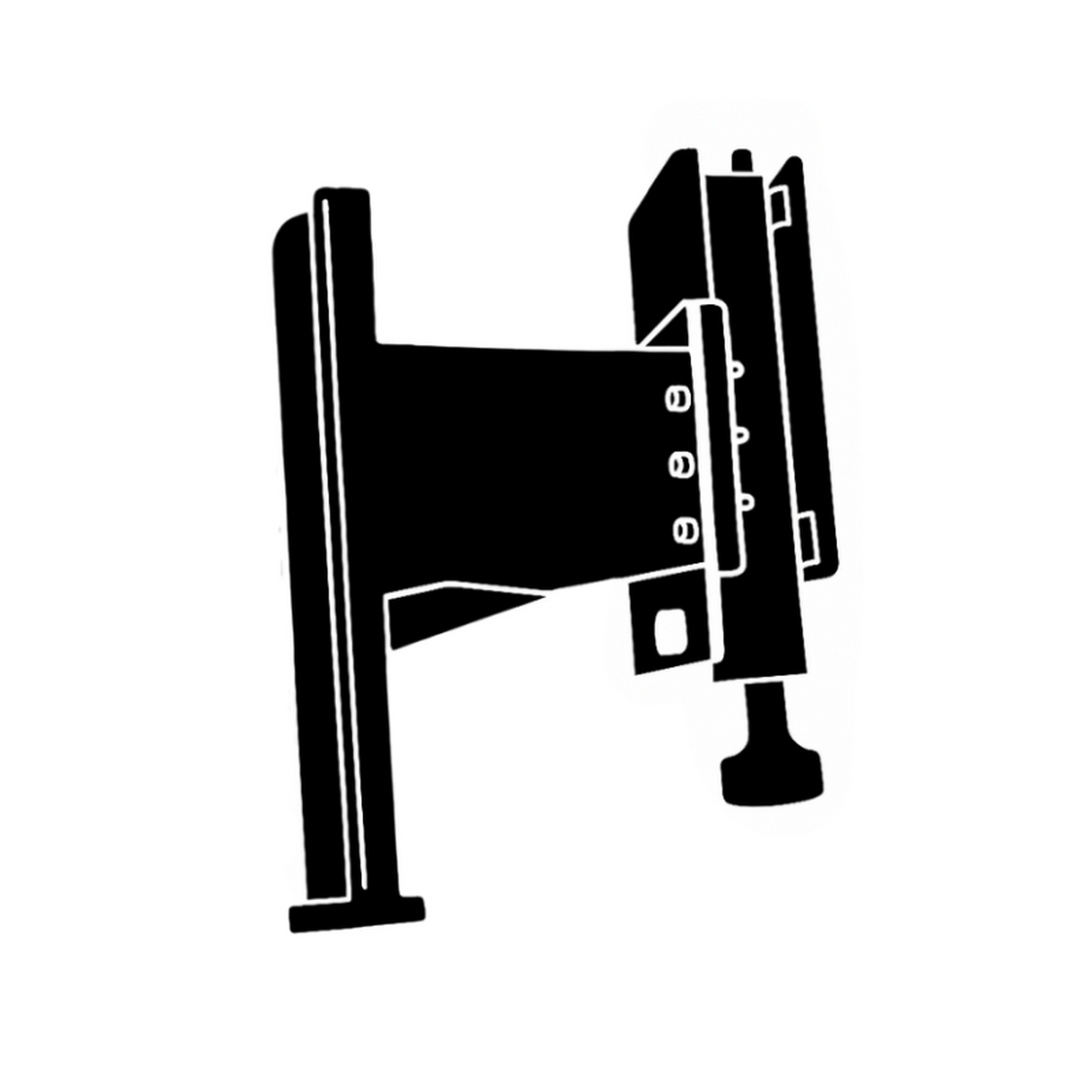 Hydraulic pile drivers for excavators
 Screening buckets for excavators
 Hydraulic grapples for excavators
 Chain trenchers
 Mixing buckets for excavators
 Flail mowers
Hydraulic pile drivers are increasingly replacing traditional foundations, as they make it faster, more precise and cheaper to install posts for fences, sheds or halls. If you want to understand when it's really worth betting on this technology and how to put its potential into practice, the following guide will take you through the key applications, benefits and tips to help you make the right decision.
How are pile drivers changing fence installation? Find out when they really save time and money
When you start planning the installation of a fence, you will very quickly notice that the biggest challenge is sometimes not so much the choice of panels or mesh itself, but the solid positioning of the posts that will hold the whole structure for years. With traditional methods, this involves digging, pouring concrete and waiting a long time until the base achieves any stability at all. Hydraulic pile drivers for excavators introduce something to this process that is hard to overlook - a real reduction in working time, even by tens of minutes per element. This not only allows you to close your investment faster, but also avoids the cost of materials that you simply don't need, because the post is set into the ground without concrete.
The second thing that cannot be overlooked is the flexibility in different ground conditions, as pile drivers can cope with sand as well as more problematic clay or gravel soils. If you are working in an area where the nature of the ground is difficult to predict, this solution often proves safer than trying to dig, which can end up with slipped walls and additional complications.
Importantly, each post can be easily dismantled, which is important for temporary developments or wherever you plan to make modifications later. It is also worth bearing in mind that the height and stability of the entire fence depends directly on the embedment depth, and pile drivers allow you to control this with a high degree of repeatability. As a result, the whole system works faster, more cheaply and more predictably, which is of great operational importance for larger developments.
Are you building a shed or lightweight structure? See why hydraulic pile drivers will do it faster than concrete
When it comes to shelters, canopies or structures used on photovoltaic farms, stable support columns are crucial, and these need to be set at the right depth for the structure to withstand wind loads and daily use. Hydraulic pile drivers work exceptionally well here because they allow metal profiles of various cross-sections - from lightweight to massive 150×150 mm - to be driven in without the need for concrete foundations. This means that you can work faster, without any downtime related to the setting time of the mix and without having to worry about the weather. Wet, frozen or unstable soils are no longer a problem, as working with the pile drivers does not require digging, which can be extremely arduous in such conditions.
If you care about timely installation, it is difficult to find a more efficient method. In practice, this means that dozens of posts can be set up in a single day, which significantly speeds up the construction of industrial shelters, bus shelters, half-halls or light canopies. It is also a way of reducing the cost of the entire project - no concrete and formwork, less manpower and equipment, and less risk of errors associated with having to plumb the structure by hand. An additional advantage is that you interfere minimally with the soil structure, which is important especially in areas where ground deformation can lead to blistering or subsequent damage.
Support columns in halls and warehouses without concrete? Discover how pile drivers improve the installation of large structures
In warehouse, production and industrial halls, the load-bearing structure determines the durability of the entire building, so the choice of method for setting the columns is of paramount importance. Pile drivers make it possible to quickly and accurately drive steel components such as rolled profiles, channels or I-sections used in portal frames. This enables the foundation process to be carried out without any downtime, which is particularly important in projects where schedules matter and every day's delay generates measurable costs. Another advantage is the possibility of assembling long-span elements while maintaining an adequate foundation depth, which affects the stability of structures particularly exposed to vibration and wind loads.
It is also worth paying attention to areas of the hall that need to be demarcated - such as work zones, storage sectors or passageways. Pile drivers excel at setting profiles for partition walls, which do not require concrete foundations but still need to be rigid enough. Likewise for lighting systems, technical poles and machine foundations, which need to be founded sturdily but still in a way that allows for possible relocation in the future.
Thinking about pile-driving? Find out about the most common mistakes and what to avoid so that you don't waste time correcting them.
If you're keen for a smooth installation of the structure, it's worth approaching the subject with more care, as it's the small omissions that most often slow down the work. One typical problem is underestimating the type of soil, which leads to choosing pile drivers with insufficient impact force - the post is then set too shallowly and the whole structure loses stability. It is just as easy to overlook the issue of plumbing, which in the case of fences, sheds or halls is of great importance for the subsequent geometry of the entire frame.
In practice, there are a few specific mistakes that are most often repeated and worth avoiding:
- use of equipment unsuitable for the ground, such as hand pile drivers in clay or gravel, which usually results in a waste of time and nerves,
- failing to check the condition of the machinery - unlubricated bushings, worn out quick couplings or poorly fitted blades on hydraulic pile drivers reduce the impact force and cause downtime,
- disregardingthe geodetic alignment, resulting in misalignment of the construction lines and subsequent adjustments to already installed parts,
- working too fast without a prior plan, resulting in successive columns being set up chaotically and requiring corrections.
With an organised approach, the right choice of equipment and attention to detail, the caulking itself runs incomparably more smoothly. Not only do you gain time, but you also gain the confidence that the structure will be stable without having to go back to sections that have already been done.
Want to work faster and cheaper? Find out how to increase efficiency step by step
If you want to streamline installation and squeeze maximum efficiency out of your pile drivers, start by sorting out all the logistics of the job before the equipment even goes into the field. Arranging a consistent order for driving the posts, preferably in the direction of the wind or from the centre of the structure, avoids the constant repositioning of the machine that generates unnecessary interruptions. Well-thought-out facilities also make a big difference: poles arranged in the right order, attachments on hand and an operator who does not have to wait for material. A well-chosen clamp also has a huge impact - a matched diameter increases the stability of the pole in the first second of impact and minimises errors that would be difficult to correct later.
To really speed up the work, it is worth implementing a few practical rules:
- driving the poles in one well thought-out sequence, without jumping between sections,
- always placing the material within reach of the operator to avoid unnecessary walking or driving over equipment,
- fitting clamps and sockets to the cross-section of the pole, reducing the risk of overturning,
working in logical zones, which define the direction of the installation and organise the activities of the entire team,
early preparation of the site so that no obstacle blocks the subsequent stages, - controlling the availability of fuel and oil to avoid interruptions caused by a lack of basic materials.
Ultimately, whether you are working on fences, light structures or large halls, the key role is always played by top quality equipment that guarantees the efficiency, precision and safety of the entire process. At Techna Poland you will find professional attachments for excavators, tailored to different types of tasks and working conditions, so that every project can run faster, more stable and without unnecessary downtime. If you care about reliability - this is the place where you can easily complete equipment for years to come.
FAQ
- Is the pile driver suitable for installing fences on plots with uneven terrain?
Yes, the pile drivers perform well on terrain with varying heights, as no excavation is required. As a result, the posts can be set in a stable manner without having to level the ground.
- How deep should the posts be driven for the fence?
The standard depth is 0.8-1.2 m, but the final value depends on the type of soil and the height of the fence. The taller the structure, the deeper the foundation is required.
- Can pile driving with a pile driver damage underground utilities?
There is little risk if you carry out a prior check of the location of the pipes. The pile driver allows you to control the depth of the blows, which makes the work safer.
- Can pile driving be carried out in winter?
Yes, hydraulic pile drivers also work well in winter conditions where digging would be much more difficult. The force of the impact makes it possible to penetrate a layer of frozen ground.
- Are pile-driven posts as stable as concrete ones?
In many applications, the stability is comparable and, for some structures, even better. The pile drivers allow the posts to be set without any voids around them, which increases their rigidity.
- Can the embedded post be moved to another location later?
Yes, the post can be pulled out without damaging the ground and re-founded. This is a major advantage for temporary structures or changes in the layout of a building.
- What profiles can be driven with the hydraulic pile drivers?
The most commonly used profiles are 40×40 mm, 50×50 mm, up to 150×150 mm and various types of steel pipe. The pile driver is selected according to the diameter of the workpiece and the type of soil.
- Will pile driving work well for the installation of photovoltaic structures?
Yes, it is one of the most popular methods for assembling PV farms. The pile driver allows thousands of support profiles to be set up quickly, with significant savings in foundation costs.
- Is it worth hiring a pile driver if I am only building one fence?
For small projects, renting is cost-effective because the cost of use is low compared to buying the equipment. Hiring also eliminates the need to service and store the equipment.
- What are the most common mistakes made when driving the posts with the pile drivers?
The most common are driving too shallow, lack of plumbing and failure to adapt the pile drivers' power to the ground conditions. Avoiding these mistakes significantly improves the stability of the entire structure.
Read also:
- Types of chisels for hydraulic breakers - which chisel to choose for specific tasks?
- Advantages of hydraulic pile drivers in agriculture and photovoltaic farm construction
- Hydraulic pile drivers for excavators - fast installation of fences and piles
- Purchase or hire hydraulic pile drivers for excavators?
 Previous
